Dishes like Peking Duck grab all the attention — and fair enough, they should. But honestly? The true test of any Chinese kitchen is what happens with the everyday stuff. The dumplings. The noodles. The dishes that don’t need a dramatic presentation because the technique speaks for itself.
At Toki, a MICHELIN Guide selected restaurant in Jeddah, these classics aren’t afterthoughts. They’re treated with the same precision as anything else on the menu. And once you taste the difference, you’ll understand why.
Dumplings: where the real skill shows
Dumplings are the heartbeat of Cantonese dim sum, and they’re where a chef’s skill is most exposed. No sauce to hide behind, no fancy plating to distract — it’s just wrapper, filling, and technique.
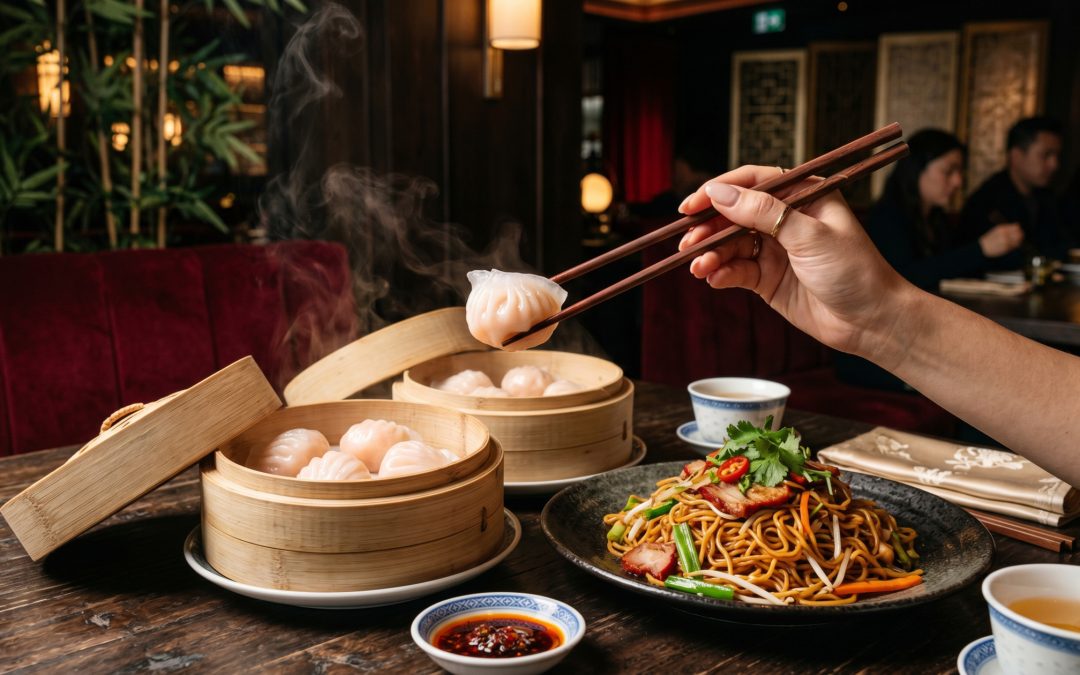
Take the Crystal Shrimp Har Gao. This is the dish other dim sum chefs use to judge a kitchen. At Toki, the wheat starch wrapper turns translucent under the steam, and you can actually see the whole shrimp sitting inside. Every dumpling is pleated by hand. When you bite in, the wrapper gives way instantly and the shrimp is sweet, firm, and perfectly cooked. It sounds simple. It’s anything but.
Then there’s the Xiao Long Bao — soup dumplings filled with Guangzhou-style spiced chicken and a hot broth that’s sealed right inside the wrapper. You’ve got to be careful with these. Place it on your spoon, nip a small hole in the side, let the steam escape, sip the broth, and then eat. Skip that step and you’ll burn your tongue. Trust me on this one.
And don’t overlook the Char Siu Bao. The steamed version has that fluffy white exterior that tears apart in your hands. The baked version? Completely different — golden glaze, slightly sweet, caramelised edges. Order both. They’re essentially two separate dishes that share a name.
Noodles: it’s all about the wok
A noodle dish sounds simple until you see what goes into getting it right. At Toki, it all comes down to wok hei — “the breath of the wok.” That means intensely high heat and fast, constant movement. The noodles get seared so they keep their bite without turning soggy, and they pick up this subtle, almost smoky char that you just can’t replicate on a normal stove at home.
Whether it’s paired with tender slices of beef, fresh seafood, or simply tossed with crisp vegetables and a good soy sauce, the noodles arrive at the table alive with heat. They’re the perfect thing to order after something intense like Szechuan Beef — a grounding dish that brings everything back down and gives your palate a reset.
The signature you shouldn’t skip
While we’re talking classics, there’s one dish that sits permanently on Toki’s menu and deserves a mention every time — the Foie Gras Roasted Duck Su. It takes dim sum principles and runs with them. A flaky, layered pastry shell packed with duck, sesame, mango, coriander, and XO orange. It’s not something you’d find in a traditional Cantonese teahouse, and that’s the point. It’s what happens when a fine dining kitchen respects tradition but isn’t afraid to push it forward — which is Toki’s whole approach in a nutshell.
Putting your table together
The beauty of the Toki menu is how all these pieces fit together. Start with the craftsmanship of the dumplings — a few steamers to set the pace. If something bold like Peking Duck or Szechuan Beef is on the specials that month, let it anchor the middle. Then wind things down with a plate of wok-tossed noodles. Finish with an egg custard tart if you’ve got room.
Toki was built for exactly this kind of meal — unhurried, shared, passed around the table in a dining room where Chinese Art Deco meets modern Jeddah. It’s simplicity and tradition with a hint of something new. And that’s the thing about the classics here. They’re familiar, but they’re not what you’re expecting.