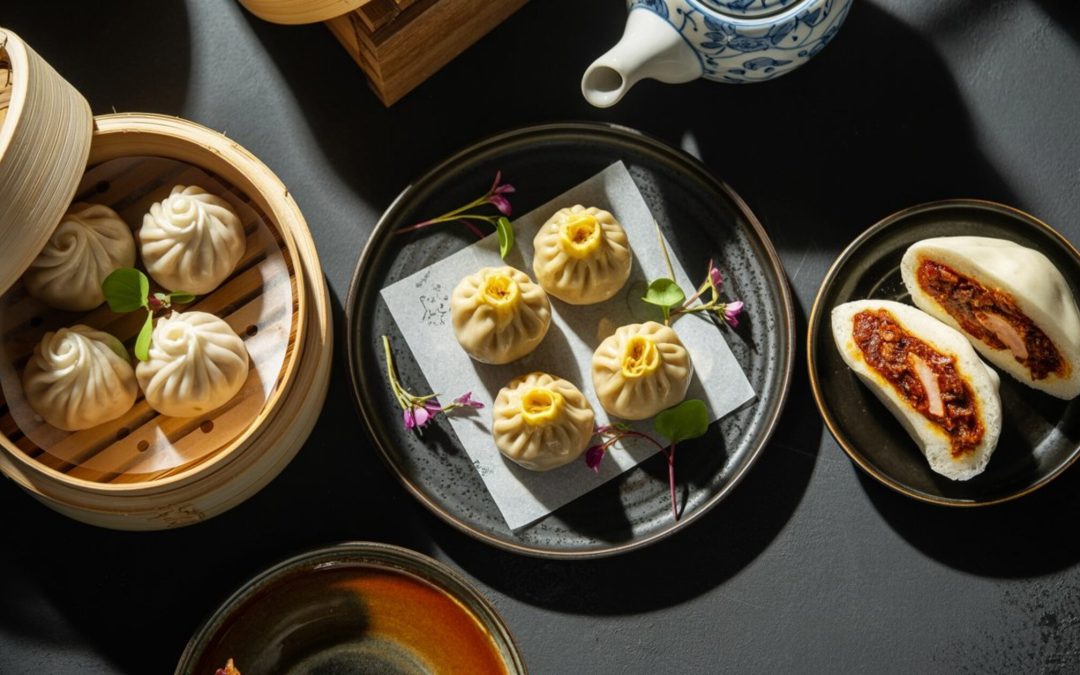
When most people picture dim sum, they picture dumplings in a bamboo steamer. That is fair. Steamed dumplings are the tradition’s most recognisable form. But sit down to a full dim sum table and you quickly realise steaming is only one technique out of several. The range runs from delicate translucent parcels that barely hold together to golden fried crescents that crack on first bite, to baked buns with a glaze that caramelises under oven heat.
How these categories work together on the table is the difference between a good dim sum meal and a great one. At Toki, each category gets treated as a distinct part of the experience, not interchangeable options on a checklist.
Why the cooking method matters
A dumpling is not just filling inside a wrapper. The cooking method changes everything. The texture of the skin. The way the filling releases its flavour. The weight of the dish on your palate. How quickly you eat it. Steamed dim sum arrives soft and yielding. Fried dim sum arrives with resistance, a crust you bite through before reaching the interior. Baked dim sum sits between the two, with structure from the oven and warmth from the filling radiating outward.
This is why the best dim sum meals alternate between methods. Three consecutive steamed dishes and your palate starts going flat. Follow steamed with fried, and the contrast wakes everything up again. That principle of alternation, texture against texture, light against rich, is a core part of Cantonese cooking philosophy.
Steamed dim sum: the foundation
Steaming is the oldest and most technically demanding method in dim sum. There is nowhere to hide. No oil to add crunch, no oven to create colour. The wrapper, the filling, and the timing have to be right, or the dish fails visibly.
Crystal Shrimp Har Gao is the most important steamed dim sum item on any menu. At Toki, the wrapper is made from wheat starch, not regular flour, which turns translucent under steam. The pleating is done by hand, each dumpling folded into a crescent with enough folds to hold the wrapper together without thickening it. Inside, whole shrimp stay firm and sweet. Not minced, not blended. Har Gao is the dish chefs use to size up other dim sum kitchens. If the Har Gao is good, the kitchen knows what it is doing.
Xiao Long Bao at Toki uses Guangzhou-style chicken in a light spicy broth. The broth inside starts as a gelatinised stock, solid at room temperature. During steaming, it melts into liquid. The dumpling arrives containing both filling and soup. The wrapper needs to be strong enough to hold the broth without tearing, thin enough to not taste doughy. That balance is genuinely hard to get right.
Steamed vegetable dumplings round out the steamed selection with a lighter touch. Seasonal vegetables in a translucent wrapper, offering a palate cleanser between richer items.
The defining quality of all steamed dim sum is purity. You taste the ingredient, not the cooking process. That is the Cantonese principle at its most direct.
Fried dim sum: the contrast
If steamed dim sum is about subtlety, fried dim sum is about punctuation. A fried item arrives at the table making a statement. Golden, crisp, immediate. The kitchen’s job is to make sure the interior stays soft and flavourful while the exterior develops a shell thin enough to add texture without turning greasy.
Pan-fried dumplings, sometimes called potstickers or guotie, are seared on one side until a golden crust forms, then steamed briefly under a lid. The result is a dumpling that is crispy on the bottom and soft on top. That textural split is the whole point. At Toki, these show up between steamed courses, and the timing is deliberate. After several rounds of soft, yielding textures, the crunch resets your palate.
Spring rolls belong in this category too, though they tend to be lighter than deep-fried dumplings. A proper dim sum spring roll uses a wrapper so thin it practically dissolves under the oil, leaving behind a shell that shatters when you bite through it. The filling is minimal, usually julienned vegetables and a small amount of protein, because the wrapper is what you are really eating.
Taro puffs are worth mentioning on their own. Deep-fried dim sum with a lacy, honeycomb-like exterior. The batter puffs dramatically in hot oil, creating a crispy mesh around a savoury taro filling. They look almost impossible the first time you see one. They taste better than they look.
Baked dim sum: the bridge
Baked items occupy a middle ground. They have the structural integrity that steamed dishes lack, but without the oil of fried items. The oven adds colour, aroma, and a slight caramelisation that steaming and frying cannot replicate.
Char Siu Bao in its baked form is the most recognisable item here. The exterior develops a glossy, lightly sweet glaze under the oven’s heat. Inside, the barbecued meat filling is sticky, savoury, and faintly smoky. The baked version is quite different from the steamed char siu bao, which has a fluffy white exterior that tears apart in your hands. Both are worth ordering. They are effectively two different dishes that happen to share a name.
Foie Gras Roasted Duck Su at Toki takes the baked category into more ambitious territory. A pastry shell, layered and flaky, encasing duck with sesame, mango, coriander, and XO orange. It is not a traditional dim sum item in the Guangdong teahouse sense. It is what happens when a fine dining kitchen applies dim sum principles to premium ingredients. That crossover between tradition and ambition is part of what makes fine dining Chinese in Jeddah different.
Rice noodle rolls and other outliers
Not everything on a dim sum table fits neatly into steamed, fried, or baked.
Cheung fun, the rice noodle rolls, deserve their own mention. A thin batter of rice flour is poured onto a flat steamer tray, cooked until it just sets, then rolled around a filling of shrimp, beef, or char siu. The texture is slippery, silky, and unlike anything else in the meal. Dressed with a light soy, cheung fun is often the most technically refined dish on the table and the one most first-timers overlook. That is a mistake.
Congee, a thick rice porridge, occasionally appears as part of a dim sum spread, particularly in the traditional morning format. And turnip cake, a savoury block of shredded radish and rice flour pan-fried until golden, bridges the gap between side dish and main attraction.
How to build a balanced dim sum order
The principle is simple. Alternate textures, control the pace, and do not order too much at once.
A strong dim sum meal at Toki follows this kind of rhythm. Open with steamed: Har Gao, Xiao Long Bao, one vegetable option. These set the tone. Then shift to fried. One pan-fried dumpling or a spring roll. The crunch wakes up the table. Add a cheung fun next. The rice noodle roll brings a completely different texture and slows the pace before the next round. Return to steamed or baked after that. Char Siu Bao in baked form for contrast, or a second round of whatever steamed item was the favourite. Finish sweet if you want. Egg custard tart, sesame ball, or mango pudding. Keep it light.