
Of all the regional traditions within Chinese cuisine, Cantonese cooking is the most widely eaten and the least understood at the same time. Cantonese immigrants shaped what most of the world first called “Chinese food,” so the cuisine got stuck with its most exported forms — sweet and sour, fried rice, spring rolls. The real Cantonese tradition is something far more refined.
The Philosophy: Ingredients First, Always
Cantonese cuisine originates from Guangdong Province, China’s most southeastern region — a coastal area with centuries of access to quality seafood, fresh produce in abundance, and the pull of international trade routes. That context shaped a culinary approach built on one principle: the quality of the ingredient determines the quality of the dish.
This is why Cantonese cooking leans on steaming, poaching, and precise wok work rather than heavy marinades or complex saucing. The aim is preservation — of texture, of natural sweetness, of the clean flavour that a genuinely fresh ingredient carries on its own. Seasonings exist to support, not to dominate. A whisper of ginger, a touch of superior soy, a drizzle of sesame oil. Nothing more than the ingredient needs.
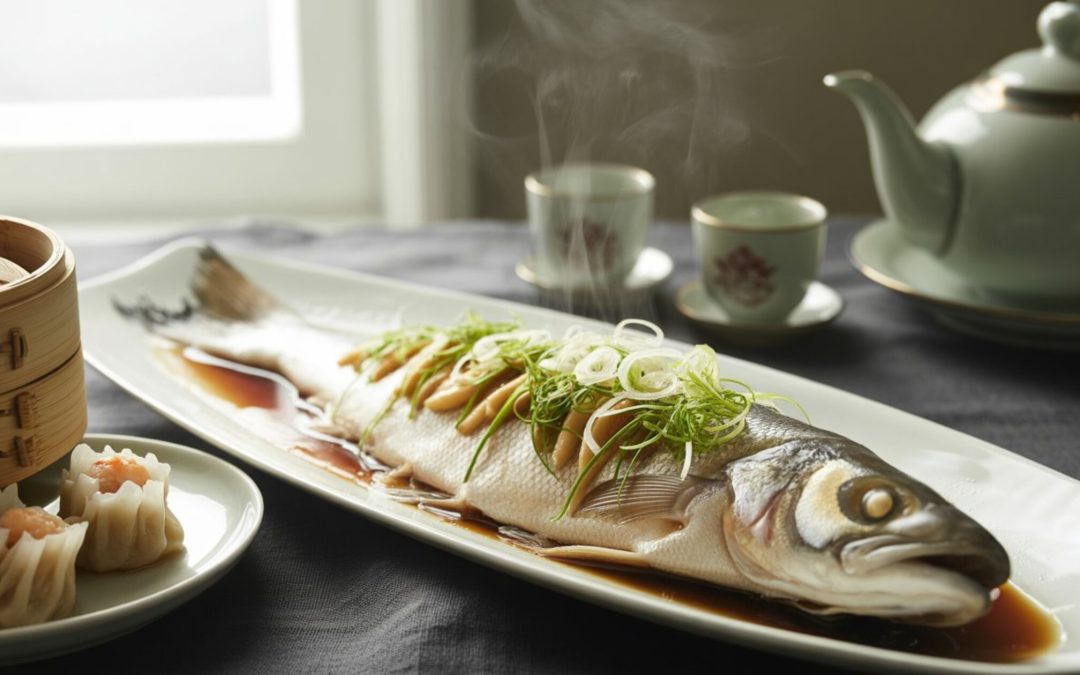
At Toki, this philosophy comes through most clearly in the Cantonese Steamed Seabass — a whole fish, dressed with ginger, spring onion, leek, and superior soy. The technique demands absolute timing. One minute too long and the flesh tightens. One minute too short and the natural sweetness never fully releases. It is a dish that hides real technical precision behind apparent simplicity. That balance of technique and restraint is precisely what defines fine dining Chinese in Jeddah.
Dim Sum: The Cantonese Dining Ritual
You cannot talk about Cantonese cuisine without talking about dim sum. It started in the teahouses of Guangdong. Dim sum — which translates as “touch the heart” — is a communal, unhurried dining tradition built around small, handcrafted portions served with tea. It is not a starter. It is a complete dining philosophy in miniature.
At Toki, the dim sum selection shows Cantonese craft at its most technically demanding. The Crystal Shrimp Har Gao needs a wheat starch wrapper rolled thin enough to be nearly translucent, yet strong enough to hold under steam without tearing. The Xiao Long Bao — Guangzhou-style chicken dumplings in a light spicy broth — calls for gelatinised stock that liquefies precisely when steamed. These are not dishes you can get right without mastery. The Foie Gras Roasted Duck Su, finished with sesame, mango, coriander, and XO orange, extends that Cantonese sensibility into modern territory — a premium ingredient, precise technique, flavour that is layered but never heavy.
For contrast with these clean, restrained flavours, see how the other great southern Chinese tradition takes an entirely different approach in Szechuan Cuisine in Jeddah. The two traditions read very differently on a menu — and understanding both is the most useful thing you can do before you order.
How to Order Cantonese at Toki
Build a Cantonese-leaning meal around contrast in texture and weight. Start with the Cantonese Duck Salad — citrussy sesame dressing, pomegranate, light and sharp. Move into the Sesame Glazed Salmon, where honey, oyster sauce, and sesame create a sweet-savoury glaze over precisely cooked fish. Anchor the table with the steamed seabass and a side of Cantonese Spinach with fresh mushrooms and garlic. Finish with a dim sum platter, unhurried, with tea.
That is Cantonese dining — not a collection of dishes, but a considered sequence. The full guide to Cantonese vs Szechuan at Toki shows how both traditions sit alongside each other on the menu, and which style suits your taste helps you decide where to start.