
When most people think of Szechuan cuisine, they think of heat. Fair enough — but that only gets you halfway. Real Szechuan cooking is one of the most technically complex regional traditions in Chinese gastronomy. The heat is there, yes, but it always works in service of something bigger: a dish that registers as spicy, numbing, sour, sweet, salty, pungent, and nutty. All seven. At once.
At Toki, Szechuan cuisine is not toned down for cautious palates. It is presented with the full complexity the tradition asks for.
Understanding Málà — The Defining Sensation
The character of Szechuan food comes from one ingredient above all: the Szechuan peppercorn. Unlike ordinary chili heat, which hits with a sharp burn, the Szechuan peppercorn produces málà — a numbing, tingling sensation that spreads across the palate and makes the heat that follows feel more intense and more manageable at the same time. No other cuisine creates that feeling.
The Szechuan Basin, where this cooking tradition began, is a landlocked region of southwest China with high humidity and fertile land. That climate shaped the food — bold spices were not just a preference, they were practical. The result is a tradition that prizes depth and complexity over delicacy. Where Cantonese cuisine whispers, Szechuan speaks directly. To understand how the two approaches differ at Toki’s table, the full Cantonese vs Szechuan guide maps both side by side.
Szechuan at Toki: The Dishes That Define It
Kung Pao Chicken is the most recognisable Szechuan dish on Toki’s menu — and the most instructive. Chicken, cashew nuts, dried chili, and black vinegar. The heat comes from the dried chilies. The nuttiness from the cashews. The sour note from the black vinegar. The slight sweetness from the sauce. The numbing finish from the Szechuan peppercorn. Every element is deliberate and every element pulls its weight.
Bang Bang Chicken offers a more modern Szechuan take — cold poached chicken in a bang bang sauce, finished with pandan cream and pineapple aioli. The Szechuan foundation is still there, but Toki’s kitchen adds a tropical sweetness that shifts the dish into its own register. This kind of creative evolution is part of what makes Toki more than a regional Chinese restaurant — it is one reason the MICHELIN Guide’s recognition, explored in detail in Toki’s Michelin story, carries real weight.
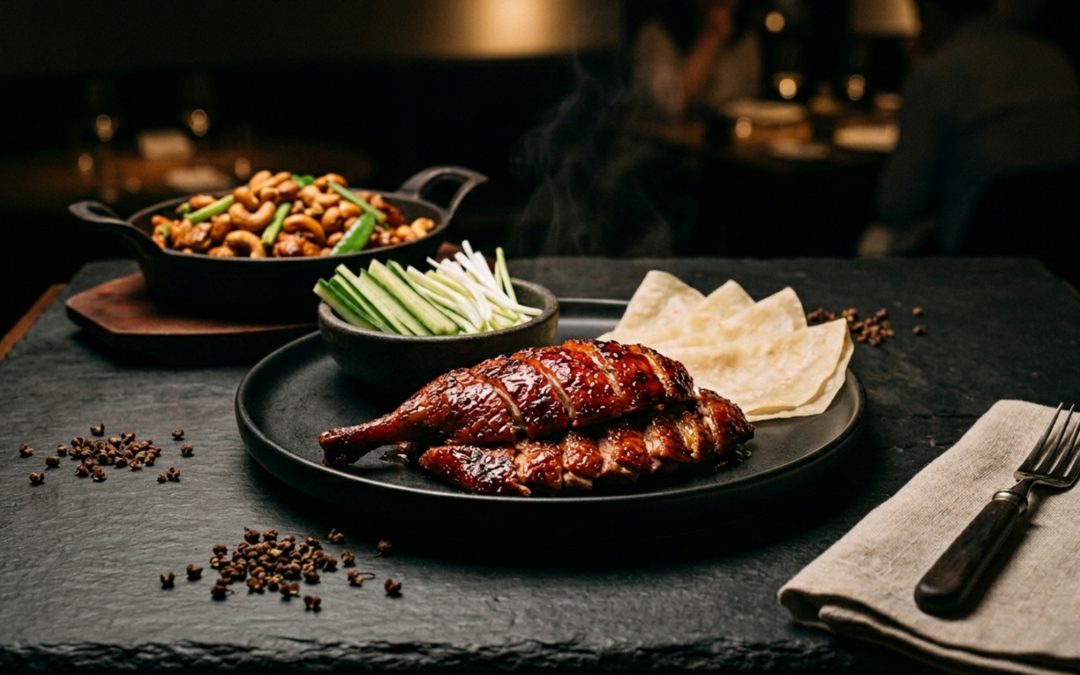
From the Duck Roastry, the Szechuan Crispy Duck may be the most complete version of the cuisine on the menu. The duck arrives lacquered and sharply crisped, served with homemade pancakes, cucumber, spring onion, and plum relish. The málà profile is present but woven in — not a heat exercise, but a fully balanced dish where the numbing spice makes the richness of the duck easier to eat, not harder.
In the dim sum section, the Szechuan Sui Mai — chicken, shrimp, soybean, chili, and Chinese mushroom — brings the Szechuan approach down to miniature: a familiar open-topped dumpling format, redirected with the cuisine’s characteristic heat and aromatic depth.
How Much Heat Should You Expect?
Szechuan cuisine at Toki is tuned for flavour, not punishment. The Szechuan dishes carry real heat — enough to be authentic — but are balanced so that the other flavour dimensions stay clearly present. If you are new to Szechuan cooking, the Yusheng Salmon Salad, with its Szechuan flavour notes alongside papaya and sesame, makes a measured and approachable starting point.
For those building a table that moves between traditions, Cantonese Cuisine Explained offers the counterpoint — and which style suits your taste helps you decide how to balance both across your order.