
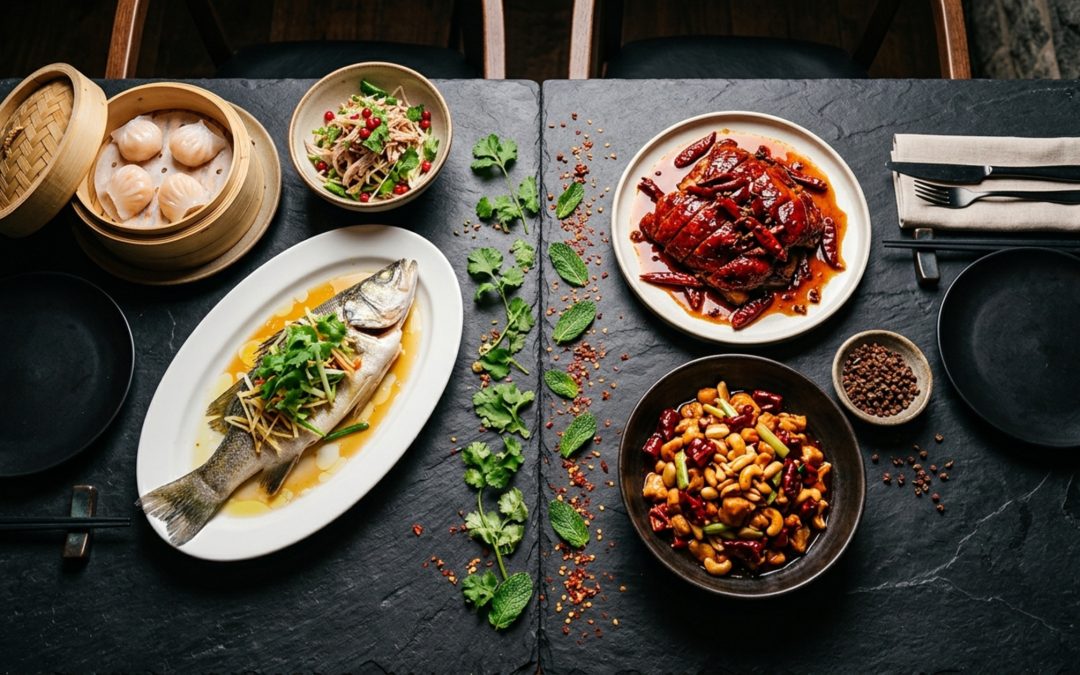
Chinese cuisine is not one thing. It covers dozens of regional cooking traditions, each shaped by local geography, climate, and centuries of kitchen discipline. Two of those traditions stand out — and tend to be the most misunderstood: Cantonese and Szechuan. At Toki, Jeddah’s MICHELIN-selected Chinese restaurant, both appear on the same menu. Not as a compromise. As a pairing — with each tradition cooked the way it was meant to be.
Once you understand the difference between these two styles, the menu stops being a list of dishes. It becomes a map.
Two Philosophies, One Table
Cantonese cuisine comes from Guangdong Province in southern China — a coastal region shaped by maritime trade, plentiful seafood, and a near-obsessive focus on ingredient quality. The Cantonese approach is simple to state, difficult to execute: let the ingredient do the talking. Seasonings stay minimal. Cooking methods — steaming, poaching, high-heat wok — are picked to protect the ingredient rather than mask it. What arrives on the plate is clean, refined, and harder to pull off than it looks.
Szechuan cuisine comes from an entirely different world. The Szechuan Basin sits landlocked in southwest China — humid, fertile, and historically suited to bold, warming spices. The defining quality is málà: the interplay of numbing Szechuan peppercorn and chili heat. No other cuisine produces that sensation. But málà is only part of it. Szechuan cooking formally recognises seven flavour dimensions — spicy, salty, sweet, bitter, sour, pungent, and nutty — and a properly cooked Szechuan dish hits all of them at once.
To understand the full depth of each tradition separately, explore Cantonese Cuisine Explained and Szechuan Cuisine in Jeddah — both break down what defines each style and how it appears on Toki’s menu.
How Toki Expresses Both Traditions
On Toki’s menu, you can see the contrast between Cantonese and Szechuan thinking in almost every section.
Take the dim sum. The Crystal Shrimp Har Gao is pure Cantonese craft — a translucent wheat starch wrapper, pleated with precision, steamed until the shrimp inside is just set. Nothing gets in the way of the ingredient. The Szechuan Sui Mai — chicken, shrimp, soybean, chili, and Chinese mushroom — takes a different route: savoury, spicy, fragrant, with the heat arriving after the first bite rather than upfront. That layering is classic Szechuan.
From the sea, the Cantonese Steamed Seabass arrives whole, dressed with ginger, spring onion, leek, and superior soy. Restraint does the heavy lifting here — the fish carries the dish. The Crispy Szechuan Angus Beef, plated with chili, spring onion, and Szechuan glaze, goes the opposite direction: every element stacks, layers, and builds.
From the Duck Roastry, the same contrast holds. The Szechuan Crispy Duck arrives with pancakes, plum relish, cucumber, and spring onion — the duck lacquered and sharp-edged, the málà profile unmistakable. The Toki Peking Duck, carved tableside, belongs to a more ceremonial Chinese tradition: technique over spice, precision over heat, the crispness of the skin speaking for itself.
Why This Matters When You Order
Most diners pick from a Chinese menu by dish name. A better approach is to build a table that moves between both styles — start with something light and Cantonese, shift into the complexity of a Szechuan dish, and let the contrast become part of the meal.
A well-ordered table at Toki might open with the Cantonese Duck Salad — citrussy sesame dressing, pomegranate, delicate and fresh — before moving into Kung Pao Chicken, with its dried chilies, cashews, and black vinegar. The contrast is not a clash. It is the point.
If you are still deciding which style suits your palate best, Cantonese vs Szechuan: Which Style Suits Your Taste offers a straightforward guide. And for the broader context of what makes Toki one of Jeddah’s most recognised dining destinations, the fine dining Chinese in Jeddah guide covers the full picture.
Both traditions are worth knowing. At Toki, you do not have to choose — you can experience them side by side, at the same table, in the same meal.